




Generative Engine Optimization (GEO) is a next-generation discipline that ensures your brand is accurately retrieved, synthesized, and cited by AI-powered search platforms, not just ranked in traditional search results.
When someone asks ChatGPT to recommend a vendor, Perplexity to explain a concept, or Google's AI Overview to summarize a topic, GEO determines whether your brand is part of that answer. Without it, your business is effectively invisible during the fastest-growing phase of the buyer journey.
At Charlesworth, we combine deep expertise in content strategy, structured data, and global digital marketing to position your brand as the machine-readable, authoritative source that AI systems choose to retrieve and cite.

OpenAI
AI Search
Microsoft
& More
AI search operates on entirely different principles than traditional search engines. Here's how GEO builds on and goes beyond conventional SEO.
| Features | Traditional SEO | Generative Engine Optimization |
|---|---|---|
| Primary Goal | Rank #1 on search results pages | Be cited inside AI-generated answers |
| User Journey | Click-through to your website | Zero-click generative experiences |
| Optimization Focus | Keywords & backlinks | Entities, schemas & semantic context |
| Content Format | Long-form pages for human readers | Machine-readable, answer-ready structures |
| Discovery Mechanism | Crawl, index & rank | RAG retrieval & vector embedding |
| Success Metric | Organic traffic & rankings | Citation Share of Voice in AI answers |
| Timeline to Results | 3–6 months (typical) | 2–4 months to first citations |
GEO doesn't replace your SEO. It extends it into a new frontier. Many GEO best practices simultaneously strengthen traditional search performance.
We have optimised our website to rank on AI platforms and we can help you create
a well formulated strategy to help you rank on AI Platforms
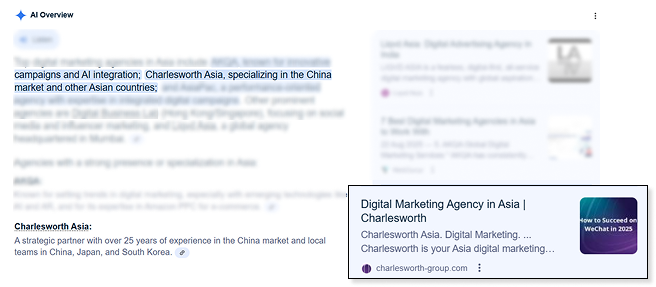
 Improve AI VisibilityLLM OptimisationAnalysis that actually make senseTailored Strategy to help you rankCustom reporting and support25+ Years of industry experience
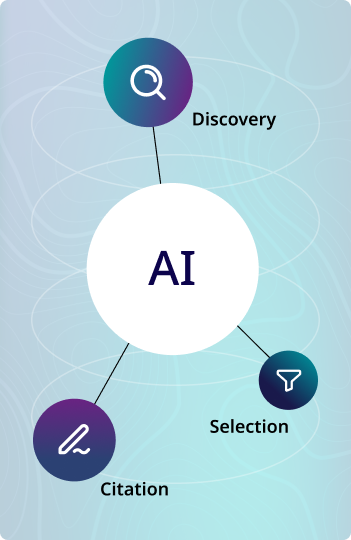
Modern AI systems don't simply "search the web." They use a process called Retrieval-Augmented Generation (RAG), and understanding it is the key to GEO.
The user's query is converted into a mathematical vector capturing deep semantic intent, not just keywords, establishing the meaning the AI needs to satisfy.
The engine scans its vector databases for highly authoritative "content fragments" whose meaning aligns precisely with the query. Not whole pages, but precise semantic chunks.
The LLM synthesizes a conversational answer using retrieved fragments, grounding its response in your data and providing a citation link back to your original content.
The GEO Imperative
To secure that citation, your content cannot just be "relevant." It must be structured as the unequivocal, machine-readable ground truth for the topics you want to own.
GEO delivers the strongest returns where authority, complex research, and long-tail context drive buying decisions. Does this sound like your market?

Technical buyers use AI copilots to research vendors and build shortlists before speaking to sales. GEO ensures your platform is recommended and accurately described during this critical, invisible research phase.

For organisations trading in knowledge, accuracy is paramount. We ensure your research, journal articles, and data sets are correctly interpreted and formally cited by AI models answering complex scientific queries.

In YMYL sectors, AI models are extremely cautious. We build the trust signals and factual density required for generative engines to confidently synthesise answers about your critical services.
AI interfaces often deliver answers without generating a click. We use advanced monitoring to measure your true AI authority, going beyond traditional web metrics.
Citation Share of Voice
We track how often your brand is cited in generative responses across major LLMs compared to competitors. Think of it as your AI market share in earned answers.Entity Sentiment & Accuracy
We monitor how accurately and positively AI models contextualize your brand, products, and key personnel, identifying and correcting AI misconceptions before they spread.AI Overview Visibility
We meticulously track your inclusion in Google's AI-generated SERP features and generative summaries, measuring the real estate you command at the top of search.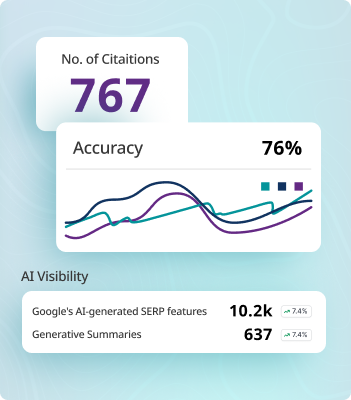
“We are delighted to collaborate with Charlesworth to amplify our presence in China. Their expertise in digital marketing and deep understanding of the Chinese market makes them an ideal partner to help us achieve our recruitment goals for Rennes School of Business.”

Louise Chen
Country Manager of China, RSBGEO is the practice of optimizing your website's content and data so AI-powered tools like ChatGPT, Google Gemini, or Bing Copilot can easily discover and use it when generating answers. Unlike SEO, which targets search rankings, GEO targets answer engines by structuring content to be AI-readable and authoritative. The goal is to make your content the preferred source when AI models respond to relevant queries.
Traditional SEO focuses on improving your position in search engine results pages, getting people to click through to your site. GEO focuses on being featured and cited in AI-generated answers. While SEO optimizes for rankings and click-throughs, GEO optimizes for visibility inside the answer itself. Many users now get what they need from AI without ever clicking a link, so GEO ensures you're present in that experience.
Content that is concise, factual, and well-structured performs best. How-to guides, tutorials, FAQs, listicles, definitions, and checklists all work well because they directly answer user questions. Step-by-step instructions and Q&A formats make it easy for AI to extract and present information. Use clear headings, bullet points, and schema markup to help AI parse and cite your content accurately.
Generative AI systems combine their training data with real-time retrieval to answer queries. They favor content that is well-structured, authoritative, and easy to parse. AI looks for clear signals of credibility, things like proper schema markup, authoritative backlinks, and consistent entity information. By optimizing content structure and trustworthiness, we increase the likelihood that AI will reference your pages when answering relevant questions.
GEO is a medium-term strategy. Unlike paid ads, visibility gains build gradually as AI models update their knowledge and as your content gets indexed and cited. Most clients start seeing increased mentions or citations in AI answers within 2 to 4 months of optimization. Results continue to improve over time, especially as AI algorithms evolve and your authority signals strengthen.
GEO and SEO work together. Many GEO best practices, clear content structure, authoritative information, schema markup, also benefit traditional SEO. Optimizing for AI often improves overall site quality, which can boost organic rankings as a side effect. We make sure GEO work reinforces your broader SEO strategy rather than conflicting with it.
Any industry can benefit from GEO, but organizations with complex or specialized content often see the biggest gains. Technical sectors like B2B tech, research, legal, and healthcare benefit particularly because AI models value authoritative expert content. A specialized manufacturer with detailed product information can become the go-to source in AI discussions. Even competitive B2C brands can use GEO to stand out in AI-driven product queries and recommendations.

Charlesworth helps brands take the next step in China and APAC. We're passionate about growing brands through localised marketing in China, Japan and South Korea. From our bases in the UK and China and our regional offices in South Korea and Japan, we're committed to understanding your business needs and delivering excellence for your brand in APAC.
By browsing this website, you agree to our cookies policy.
 EN
EN

